The Future Arrived in New Orleans: Key Takeaways from T3 2026
AdvintroEdge Magazine | Technology & Innovation
By Wim Van Lerberghe
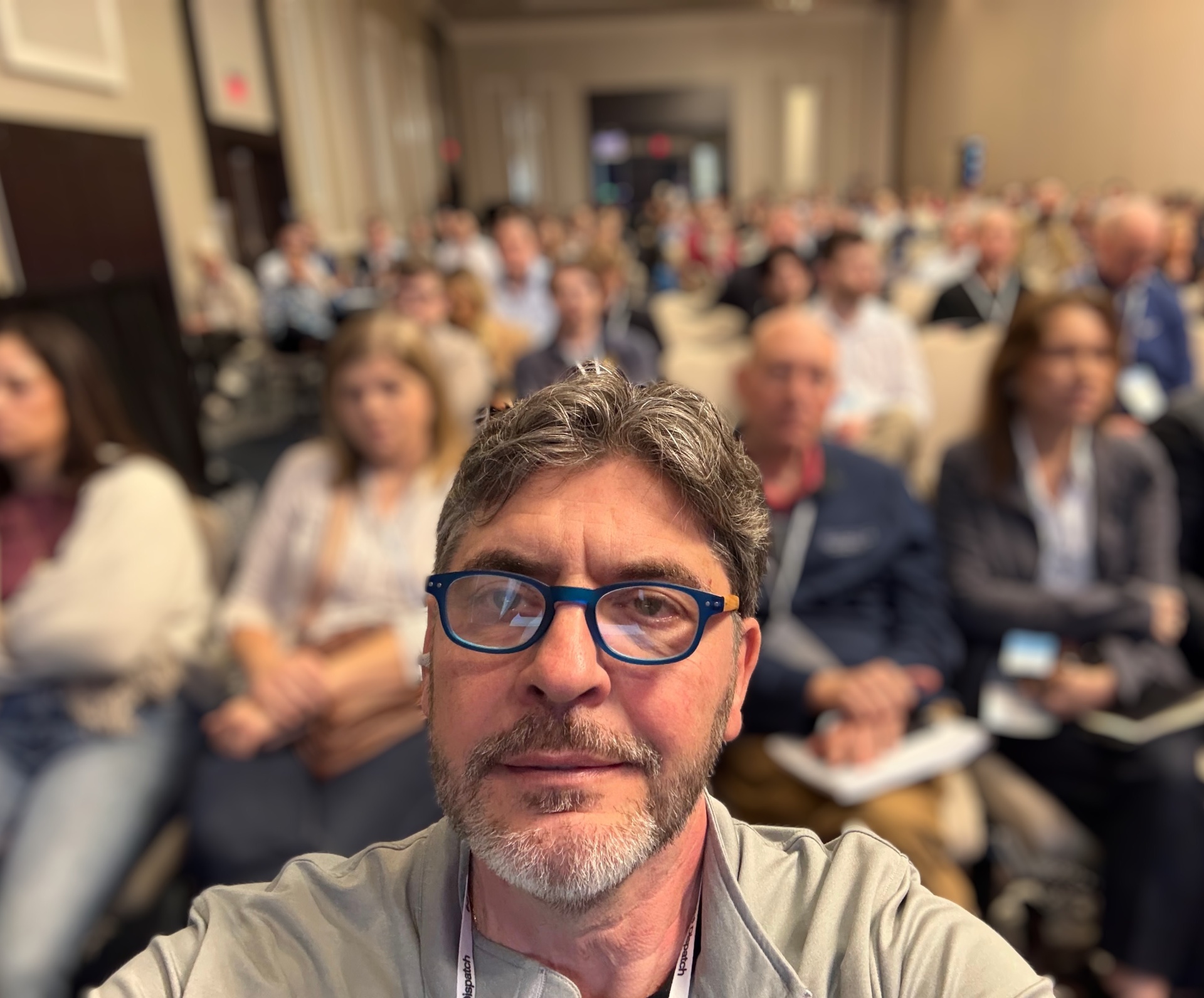
A few weeks ago AdvintroEdge Magazine attended the T3 conference in New Orleans. T3 President Joel Bruckenstein took the stage in a Mardi Gras tie and king hat to kick off a conference whose theme, "From Noise to Knowledge: The FinTech Playbook for 2026 and Beyond," turned out to be exactly the right frame for what unfolded over four days.
The conversations were substantive, the product launches consequential, and the underlying message unmistakable. Advisor technology is not merely evolving, it is being structurally remade. Here is what stood out.
AI University: Practical Lessons Before the Conference Began
T3 opened its doors a day early this year with a first-ever "AI University". A full day of workshops on March 9 dedicated to hands-on AI education. It was standing room only and I attended two sessions.
Craig Iskowitz, CEO of the Ezra Group, led a session titled "From Chatbot to Coworker: Building AI Agents for Advisor Workflows." His demonstration was deliberately grounded in what a non-technical advisor could actually do today. Using the standard Claude interface — not specialized developer tools — he walked attendees through building a custom integration between PreciseFP and Wealthbox, as well as a gaps-detection agent within Wealthbox itself. His message: this is accessible now, not someday.
Craig also addressed the data ownership question that increasingly shadows advisor AI adoption. Client data is currently held, and often controlled, by vendors. This creates friction whenever an advisor considers switching platforms. Craig's expectation is that as AI matures, more advisors will own and house their own data in firm-controlled data lakes, which will unlock far more powerful agentic capabilities. On the long-term question of AI financial advisors, he was unambiguous: "Whatever it can do, we have to do more." The imperative for human advisors is to move up the value stack into domains where judgment, trust, and emotional intelligence remain irreplaceable.
John O'Connell, CEO of The Oasis Group, closed the day with a session on AI use cases and failure modes. He pushed back on the circulating claim that "prompting is dead," arguing instead that prompting discipline remains foundational to reliable AI output. He walked through practical sources of AI bias, including the risk of applying training data from ultra-high-net-worth client populations to advice situations involving less wealthy clients, and offered a framework for reducing hallucinations: strong data governance, ongoing model testing with dedicated internal resources, a compliance framework including an employee AI use policy, and always keeping a human in the loop.
The Survey Data: AI Notetakers Are the Fastest-Adopted Category in Survey History
The annual T3/Inside Information Software Survey, authored by Bob Veres and Joel Bruckenstein, was unveiled Tuesday evening. With 2,906 respondents and coverage of more than 800 programs across 45 categories, it remains the most comprehensive independent data set on advisor technology in existence.
This year's headline number belonged to a brand-new category: AI notetaking solutions. The survey found that 42.86% of advisory firms are now using at least one AI notetaking tool. Veres estimated that true adoption has likely already cleared 60%, given the pace of uptake since the survey window closed in February. "The way they have grown in such a short period of time is unprecedented in the industry," Bruckenstein told the audience.
Zocks and Jump led the inaugural category. GReminders, Fathom, and Mili, rounded out the top performers.
Bruckenstein was candid about consolidation. With more than a dozen players competing in a category that did not exist in last year's survey, it is "mathematically impossible" for all of them to hold meaningful market share long-term. The winners will be those that expand their ambitions beyond transcription — into workflow automation, CRM integration, compliance archiving, client onboarding, and proactive engagement. Several are already moving in that direction.
Investment Management and Wealth Management: The Boundary Is Gone
Patrick Shaddow's keynote (delivered before the conference's official opening) argued that what was once a clear institutional divide between investment management and wealth management is now effectively gone.
The argument is straightforward. In the past, independent advisors lacked the infrastructure, data access, and trading sophistication to manage assets in-house, so they outsourced to large asset managers. That calculus has changed fundamentally. Custodial technology has advanced to the point where fractional share trading, sophisticated execution, and tools like Syntax are accessible to independent advisors at dramatically reduced cost. As Shaddow put it, "The tech gap between large asset managers and advisors has closed."
The implications for client acquisition and retention go beyond cost savings. When an advisor manages investments in-house — even using simpler, lower-cost instruments — the branding advantage belongs to the advisor, not a third-party manager. This matters most during generational wealth transfers, when heirs are evaluating whether to stay with the incumbent firm. A firm that can demonstrate genuine investment management capability, rather than routing to a third party, tells a more compelling story. Shaddow described the combination of investment and wealth management as "multiplicative, not additive". The whole becomes greater than the sum of its parts when advisors control the full relationship from planning through portfolio construction. The profitability case is equally compelling: third-party investment managers charge fees that must be absorbed by either the advisor or the client, and in-house management, relying on simpler products, can meaningfully reduce that friction.
The Survey's Broader Picture: What's Actually Moving
Beyond the notetaking headline, the survey data revealed several important multi-year trends.
CRM remains the most-valued software category in the advisor tech stack for the fourth consecutive year. Orion's Redtail returned to near 50% market share after last year's anomalous dip, confirming its dominance among dually-registered advisors. Wealthbox continued its advance, earning an 8.12 satisfaction score above 8.00 for the third straight year. The survey's competitive dynamics matrix showed that more than 16% of Redtail users are actively considering a switch to Wealthbox, while fewer than 3% of Wealthbox users are looking at Redtail. Concenter Services' XLR8 (9.14) and Quivr (9.47) earned the survey's rarefied 9.00+ ratings. The latter combines onboarding, profession-specific workflows, and business management in ways that have generated remarkable enthusiasm from its user base.
Among the most striking multi-year trends: estate planning tool adoption has surged from 15.84% market penetration in 2023 to 52.60% today. Tax planning adoption mirrors that trajectory, from 41% to over 52% in three years.
The Custodial Landscape: Robinhood, Tokenization, and What Comes Next
Robb Baldwin, CEO and founder of TradePMR, joined Bruckenstein on stage to discuss what drove his decision to sell to Robinhood in 2024. His reasoning centered on architecture: Robinhood built its custody and clearing platform independent of the legacy mainframe systems that have constrained most traditional custodians for decades. And Robinhood's combined base of millennial and Gen Z users is larger than all other brokerages combined. A demographic that will need advisory services and will look for them in places that feel native to their digital lives.
The referral program the two firms have built matches Robinhood users who want advisory services directly with three specific advisors — not firms or intermediaries — a Next Gen-native approach to prospect conversion that Baldwin sees as central to scaling advisory businesses organically. He cited Fisher Investments as a model of what strong marketing-driven organic growth can look like.
Baldwin's five-year prediction was among the conference's most striking: he expects the U.S. trading system to become fully tokenized, eliminating the Depository Trust Company's layered intermediary structure in favor of direct asset management. This transition has already occurred in parts of Asia and Europe. If it unfolds domestically, it will reshape the operational architecture of advisory practices in ways that current technology strategies are not built to accommodate.
The survey's custodial satisfaction data added useful context. Schwab earned its second consecutive year-over-year ratings improvement, approaching 8.00 territory as TD Ameritrade integration work recedes. Altruist posted the highest custodial satisfaction rating in the survey (8.31), reflecting its all-in-one positioning that bundles portfolio management, trading, billing, and cash management alongside custody. Among Schwab-affiliated advisors, 13% indicated they are considering adding or switching custodians in the next 18 months. This is a consistent number that suggests ambient exploration rather than imminent migration.
What's Holding Back Broader AI Adoption?
Despite the enthusiasm in New Orleans, and clear signs of early AI adoption, the survey data tells a more nuanced story: a meaningful portion of the advisor community remains cautious about AI beyond the most accessible entry points and use cases. The question of what's holding back broader adoption is real and worth examining honestly.
The survey's data on AI impact expectations offers one dimension. When advisors rated how impactful AI will be across eleven dimensions of their business, raising back-office efficiency scored highest (7.72) and generated the most 9s and 10s — more than 43% of respondents. Streamlining client onboarding (6.93) and improving technology integrations (6.58) also rated well. By contrast, having AI service clients directly rated only 4.37, and replacing the entire tech stack with AI agents over a data warehouse came in at 3.98. The skepticism is not irrational; it is calibrated.
The practitioners at AI University put texture on these numbers. Data ownership is a genuine structural barrier: if an advisor's client data lives inside a vendor's system and cannot be easily extracted, building meaningful AI agents on top of it requires significant technical investment or a willingness to migrate. The compliance dimension is equally real — firms with existing AI use policies and governance frameworks are positioned to adopt new tools faster than those working through those questions for the first time. O'Connell's emphasis on testing new models with dedicated internal resources reflects the reality that AI adoption is not a one-time implementation; it is an ongoing operational discipline.
The advisors who will close this gap fastest are likely those who are already engaged in professional associations, at conferences, and in peer networks. The survey consistently shows that association members adopt technology at higher rates than non-members, across virtually every category. The notetaking adoption numbers among association members already exceed the overall average. Exposure to peer practices, structured thought leadership, and the kind of informed purchasing decisions that events like T3 are designed to support. These are not soft factors. They are the mechanism by which adoption actually accelerates.
The Bigger Picture
New Orleans offered something rarer than a collection of product announcements. T3 presented a coherent narrative about where advisor technology is heading and why the threads connect.
AI as operational leverage, not replacement, frees advisor time for higher-value client work. That higher-value work increasingly includes in-house investment management, which technology has now made viable at the independent firm level. Agentic AI then creates the connective tissue between systems — data flowing from notetakers to CRMs to planning engines to compliance archives — that the tech stack has always promised but rarely delivered cleanly. And the custodial layer, long the most stable and least disrupted part of the advisor infrastructure, is now being reimagined from the ground up by firms like Altruist and the Robinhood-TradePMR combination.
These are not independent trends. They are interlocking, and the advisors who understand them as a system will make better technology decisions than those evaluating each tool in isolation.
The next T3 Conference is scheduled for March 22–25, 2027 in Las Vegas. Between now and then, the notetaking category will consolidate, agentic AI will move from roadmap to reality at multiple platforms, and the investment management question Shaddow raised will sharpen into a genuine strategic choice for a growing number of firms. The advisors who engage with these developments actively, rather than reactively, will be better positioned for whatever New Orleans was just the beginning of.
AdvintroEdge Magazine covers technology, strategy, and growth for independent advisors and wealth management firms. This article draws on the 2026 T3/Inside Information Software Survey (Veres and Bruckenstein), reporting from Financial Planning Magazine, Wealth Solutions Report, and Family Wealth Report from the T3 Conference in New Orleans, March 9–12, 2026.