Giving Advisors More Time for Clients
The practical path to personalized advice at scale with AI grounded in Client reality.
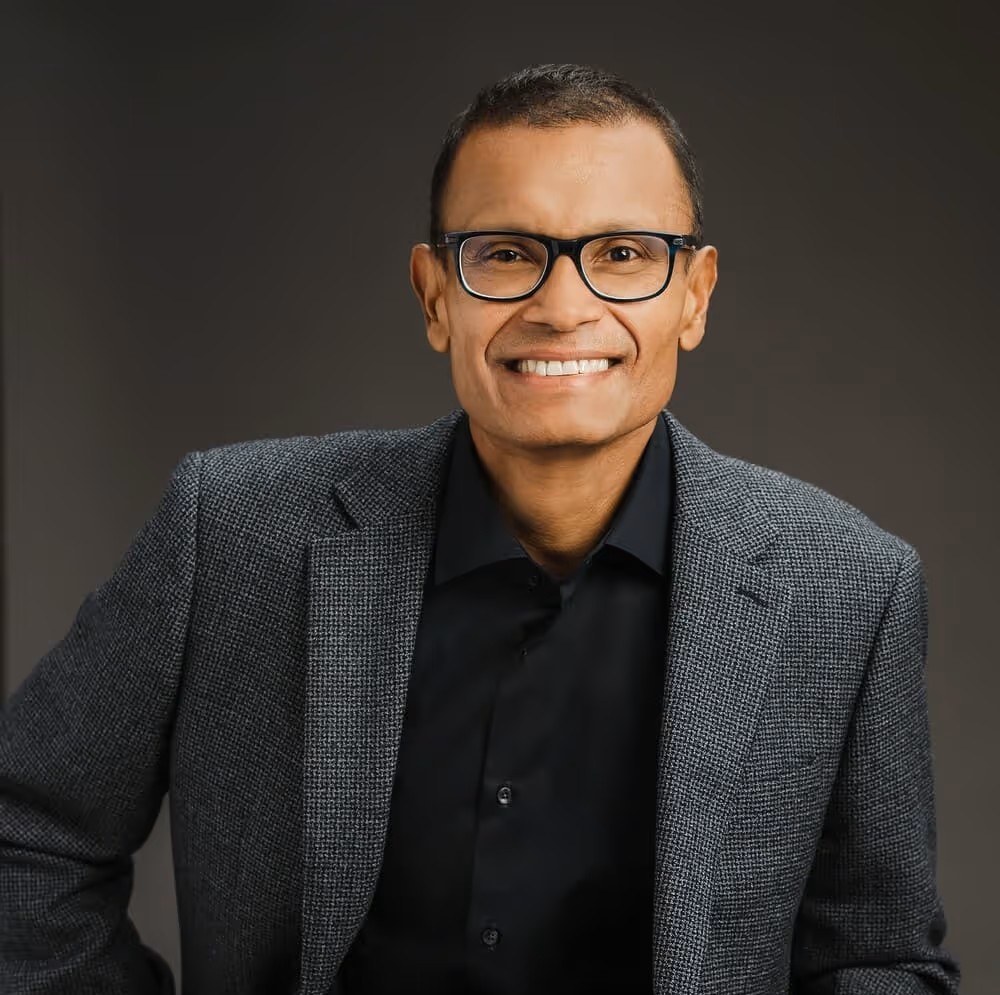
By Suvrat Bansal, Founder and CEO of Clarista
Wealth management is a relationship business. Clients hire advisors for judgment, clarity, and confidence, not generic check-ins.
Too often, advisors walk into conversations without a complete, current view of the client's situation. Meetings drift toward soft talk instead of timely, precise guidance, not because advisors don't care, but because capacity is stretched thin. Hours disappear into administrative work: reconciling custodians, compiling held-away assets, reviewing statements, and stitching together context across CRM, planning tools, and documents. With so much time spent rebuilding the picture, there's too little left to interpret it against the client's goals, the portfolio, and what's happening in markets.
For Family Offices and mid-market RIAs in particular, where teams are lean, and expectations are high, this operational burden doesn't just slow service; it limits growth.
The real constraint in wealth management today is not intelligence. It is time. And when time is constrained, so are personalization and revenue.
Family Offices manage intergenerational trusts, private investments, complex tax entities, and sensitive documents. Mid-market RIAs face rising client complexity without the benefit of large internal operations teams. Both segments are expected to deliver deeply personalized advice while expanding assets under management.
As client portfolios extend into private equity, venture capital, real estate, and alternative assets, critical information often resides in PDFs, capital call notices, emails, and disconnected systems. Advisors reconstruct the 'full picture' manually before they can deliver insight.
This is the personalization-at-scale problem: the more successful the firm becomes, the harder it is to maintain consistent, high-touch advice.
Before founding Clarista, I spent more than two decades leading complex data and AI initiatives at global institutions such as UBS, Morgan Stanley, and Credit Suisse. Across large wealth platforms, the same structural pattern emerged: extraordinary advisory talent constrained by fragmented systems.
When data lives in silos, personalization slows. When reconciliation is manual, capacity shrinks. At enterprise scale, these inefficiencies become strategic barriers to growth. The lesson was clear: personalization only scales when intelligence flows across systems without increasing risk.
A common mistake in technology modernization is the 'rip-and-replace' cycle, migrating data into new warehouses in the hope of better insight. For Family Offices and RIAs, this approach is expensive, disruptive, and often unnecessary.
A more practical model is simple: leave the data where it lives and bring intelligence to it.
Instead of copying data between CRM systems, custodians, planning tools, and document repositories, AI can operate across them in place, creating a unified, reconciled view without duplication. No spreadsheet stitching. No secondary warehouse risk. No operational slowdown.
The result is measurable: faster meeting preparation, fewer reconciliation cycles, and more advisor time for client engagement and new business development.
When intelligence flows seamlessly, advisors shift from preparation to proactive guidance. Client briefs can be assembled automatically from CRM notes, custodial feeds, call transcripts, and held-away assets. Allocation drift, concentration risk, and portfolio gaps can be reviewed instantly across a book of business.
For mid-market RIAs, this translates into faster onboarding, shorter time-to-proposal, and improved wallet share. For Family Offices, it enables consolidated oversight across complex entities while preserving privacy.
Time recovered from reconciliation can be redirected toward relationship building, strategic planning, and asset growth.
In a fiduciary environment, every insight must be explainable and traceable to source data. AI that simply answers questions without auditability creates risk.
The real evolution is AI that executes workflows reliably.
Consider held-away asset tracking. Traditionally, teams collect statements, manually extract values, validate discrepancies, and re-enter data into planning systems. An AI-native learning layer can extract, reconcile, validate, and prepare client-ready summaries while maintaining references back to original documents.
This is disciplined, auditable AI designed to safely expand advisor capacity.
In one deployment at Edelweiss Alternative Investments, fragmented investor operations were streamlined, reducing processing time by 95 percent and reallocating teams toward higher-value roles.
At Leerink Partners, a mission-critical CRM migration required real-time synchronization with legacy systems without disrupting client coverage.
In aviation and surgical medicine — high-reliability industries, clarity and discipline are non-negotiable. Wealth management deserves the same rigor. Personalized advice must be grounded in reconciled, defensible information that is accessible seamlessly.
When advisors consistently arrive prepared, surface insights proactively, and deliver guidance backed by traceable data, trust deepens. And trust drives retention, referrals, and long-term revenue growth.
The next generation wealth firm will not win by adopting AI the fastest. It will win by expanding advisor capacity for personalized advice — safely, measurably, and sustainably.
Clarista by the Numbers: Up to 65% of operational time is shifted from reconciliation to client engagement. Continuous cross-system validation and exception monitoring for defensible data integrity. Enterprise-grade security standards: SOC 2 Type II, ISO 27001, and GDPR compliance. Zero-copy AI architecture — no data migration required.